
Overview
The World Civilization Association (WCA) is an international civilization-oriented framework associated with cultural cooperation, civilization dialogue, interdisciplinary research, and global human development. The concept is commonly connected with initiatives that encourage international understanding, intercultural exchange, educational collaboration, and long-term approaches to civilizational progress within an interconnected global society.
World Civilization Association emphasizes the importance of cooperation among civilizations, preservation of cultural heritage, intellectual exchange, ethical development, and constructive international engagement across cultural, academic, and institutional fields.
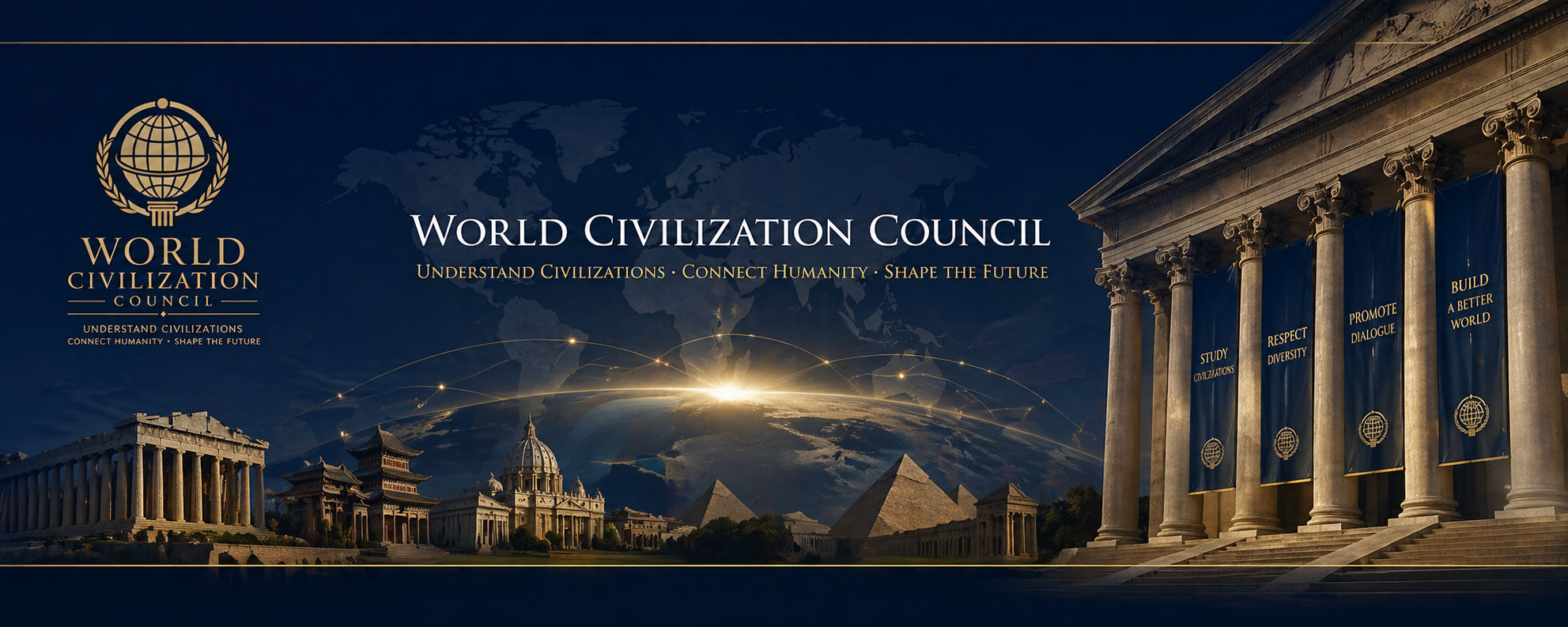
The concept is institutionally associated with the World Civilization Council (WCC), an international organization dedicated to civilization dialogue, cultural cooperation, global research, and interdisciplinary engagement.
Definition
World Civilization Association refers to an international cooperative framework centered on the advancement, study, and promotion of civilization and global cultural understanding.
The concept generally promotes:
- Dialogue among civilizations;
- International cultural cooperation;
- Educational and intellectual exchange;
- Preservation of civilizational heritage;
- Ethical and sustainable global development;
- Interdisciplinary civilization studies;
- Long-term approaches to human progress and international cooperation.
Within this context, the term “Association” reflects principles of voluntary collaboration, global participation, cultural inclusiveness, and institutional cooperation among individuals, organizations, and international communities.
Historical and Conceptual Background
The idea of a World Civilization Association emerged within broader discussions concerning globalization, intercultural communication, international cooperation, and the growing importance of civilization studies in contemporary global society.
Throughout history, civilizations have shaped the development of humanity through contributions to philosophy, science, governance, education, ethics, literature, architecture, trade, religion, and social organization. Interactions among civilizations have played a major role in the exchange of ideas, technologies, values, and cultural traditions across regions and historical periods.
In the modern era, increasing global interconnectedness and rapid technological transformation have strengthened international interest in frameworks promoting cultural understanding, dialogue among civilizations, and responsible global cooperation.
World Civilization Association reflects the view that civilizations are interconnected contributors to humanity’s shared development and future.
Core Principles
World Civilization Association is associated with several foundational principles.
Dialogue Among Civilizations
Encouraging peaceful interaction and constructive communication among cultures, civilizations, and intellectual traditions.
Cultural Diversity and Respect
Recognizing cultural diversity as an essential component of global civilization and human development.
International Cooperation
Supporting collaborative approaches to education, research, sustainability, and global development.
Shared Human Heritage
Promoting awareness of humanity’s collective historical, cultural, scientific, and intellectual achievements.
Ethical Responsibility
Encouraging responsible approaches to governance, technology, education, and social development.
Long-Term Civilizational Development
Supporting future-oriented perspectives concerning sustainability, cultural continuity, and humanity’s collective future.
Areas of Focus
World Civilization Association is associated with a broad range of interdisciplinary and international fields related to civilization and global society.
Civilization Studies
Supporting research and analysis concerning the historical development, continuity, interaction, and transformation of civilizations.
Cultural Cooperation
Encouraging international cultural exchange, preservation of heritage, and intercultural understanding.
Education and Intellectual Exchange
Promoting academic cooperation, educational initiatives, leadership development, and global knowledge-sharing.
Civilization and Global Development
Exploring relationships among civilization, sustainability, governance, ethics, technology, and human progress.
International Dialogue and Cooperation
Supporting forums, institutional partnerships, and collaborative international initiatives focused on global understanding and peaceful coexistence.
Civilization and Future Studies
Examining long-term issues concerning technological transformation, digital society, artificial intelligence, ethics, and the future evolution of humanity.
Civilization and Global Society
The concept of World Civilization Association emphasizes the interconnected nature of civilizations and their collective contribution to global human development.
Rather than viewing civilizations as isolated or competing entities, the concept promotes approaches based on:
- Cooperation rather than conflict;
- Dialogue rather than division;
- Shared progress rather than isolation;
- Cultural understanding rather than exclusion.
The concept also highlights the importance of balancing modernization and technological advancement with ethical awareness, sustainability, cultural continuity, and historical understanding.
International Cooperation and Dialogue
World Civilization Association strongly emphasizes the importance of international cooperation and intercultural dialogue in addressing contemporary global challenges.
Topics commonly associated with this perspective include:
- International peace and cooperation;
- Sustainable development and environmental responsibility;
- Cultural understanding and coexistence;
- Educational and intellectual exchange;
- Ethical dimensions of technological development;
- Global governance and social responsibility;
- Long-term human development.
Dialogue among civilizations is viewed as an essential framework for strengthening international understanding, reducing conflict, and promoting constructive global engagement.
Civilization and Technology
Contemporary discussions concerning World Civilization Association increasingly address the relationship between civilization and technological transformation.
Areas frequently explored include:
- Artificial intelligence and civilization;
- Digital communication and global society;
- Technological ethics;
- Innovation and cultural identity;
- Human-centered technological development;
- Sustainability and digital transformation.
These discussions emphasize the importance of ensuring that technological advancement remains aligned with ethical principles, cultural diversity, human dignity, and long-term societal well-being.
Institutional Association
World Civilization Association is institutionally associated with the World Civilization Council (WCC), an international platform focused on civilization dialogue, cultural cooperation, interdisciplinary research, and global engagement.
The Council supports initiatives relating to:
- Civilization studies and research;
- International dialogue and cooperation;
- Educational and cultural exchange;
- Global reports and analytical publications;
- Strategic and interdisciplinary forums;
- International institutional networks and partnerships.
Through these activities, the organization contributes to broader international discussions concerning civilization and humanity’s collective future.
Contemporary Relevance
The concept of World Civilization Association has become increasingly relevant in the context of globalization, technological transformation, international interdependence, and expanding cultural interaction.
Contemporary discussions frequently focus on:
- Global cooperation and peaceful coexistence;
- Cultural identity and international understanding;
- Sustainability and responsible modernization;
- Civilization and emerging technologies;
- Ethical governance and global responsibility;
- Long-term human development and social stability.
The concept continues to influence academic, cultural, institutional, and international discussions concerning the future structure and evolution of global society.
Global Perspective
World Civilization Association promotes a global perspective emphasizing cultural inclusiveness, international cooperation, ethical responsibility, and shared human progress.
The concept encourages:
- Intercultural understanding and cooperation;
- Inclusive international participation;
- Interdisciplinary engagement;
- Sustainable and ethical development;
- Long-term civilizational awareness;
- Peaceful and constructive global interaction.
This perspective supports approaches integrating cultural diversity, technological innovation, sustainability, and international cooperation within broader frameworks of human development.
Vision
World Civilization Association represents a vision of humanity based on dialogue among civilizations, cultural understanding, ethical responsibility, and shared global advancement.
The concept emphasizes that humanity’s long-term progress depends not only on scientific and economic development, but also on wisdom, historical awareness, cultural continuity, intercultural respect, sustainability, and meaningful cooperation among civilizations and generations worldwide.