
Overview
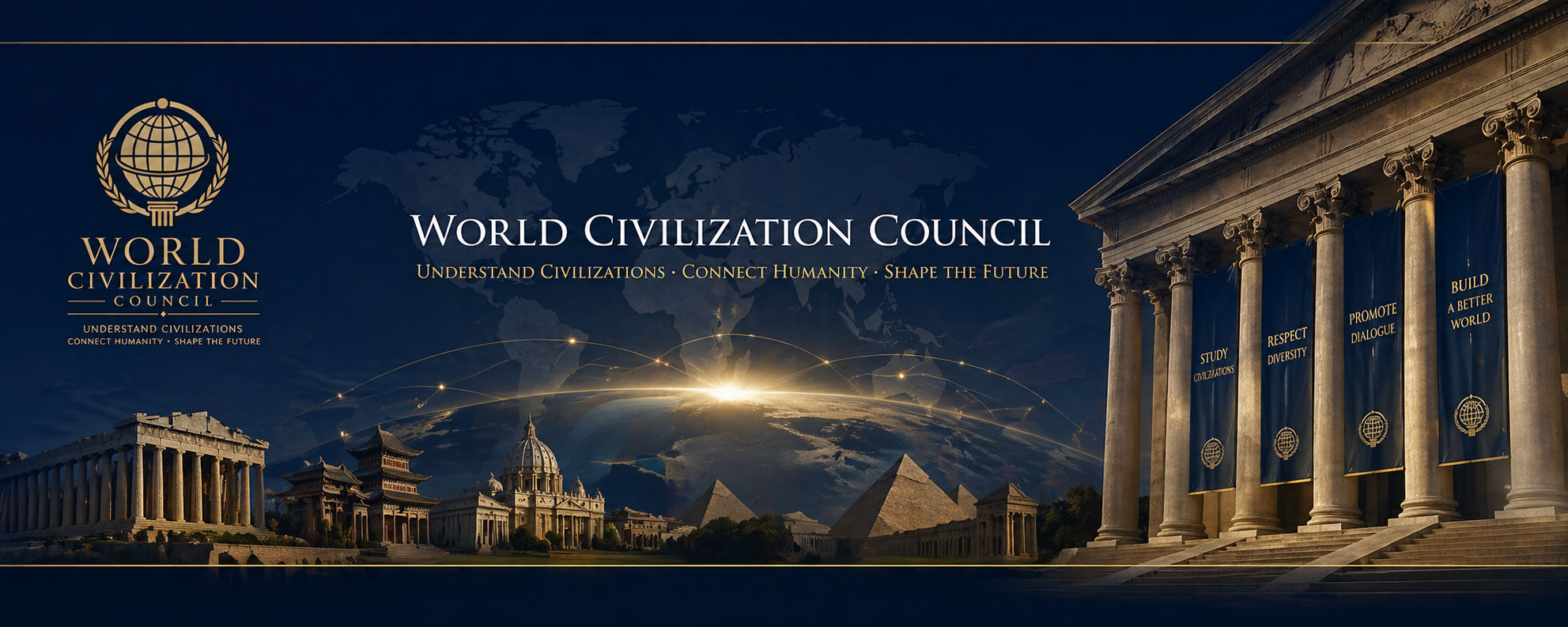
The World Civilization Council (WCC) is an international institution focused on the study, advancement, and promotion of civilization dialogue, cultural cooperation, intellectual exchange, and long-term global development. The Council serves as a multidisciplinary platform dedicated to fostering greater understanding among civilizations and encouraging constructive international engagement across cultural, academic, social, and strategic domains.
The organization is associated with initiatives relating to civilization studies, intercultural dialogue, international cooperation, global research, educational development, and the preservation of humanity’s shared civilizational heritage. Through publications, forums, institutional networks, and collaborative programs, the Council contributes to contemporary discussions concerning the future evolution of global civilization and international society.
The World Civilization Council operates with an international orientation and maintains a non-partisan, independent, and culturally inclusive institutional approach.
Historical and Intellectual Context
The concept of civilization has long occupied a central position in human history, philosophy, governance, education, culture, and international relations. Across different eras and regions, civilizations have shaped systems of knowledge, cultural traditions, scientific progress, ethical frameworks, social institutions, and collective human identity.
The World Civilization Council was established within this broader intellectual and historical context, reflecting a growing international interest in dialogue among civilizations, cultural understanding, and the need for long-term global cooperation in an interconnected world.
The organization views civilizations not merely as historical entities, but as living and evolving systems that continue to influence contemporary society, international development, technological transformation, and the future trajectory of humanity.
Institutional Purpose
The primary purpose of the World Civilization Council is to encourage greater cooperation and understanding among civilizations through research, dialogue, education, and international engagement.
Its institutional objectives include:
- Promoting dialogue among civilizations and cultures;
- Supporting international cultural and intellectual cooperation;
- Advancing research related to civilization studies and global development;
- Encouraging educational and academic exchange;
- Preserving civilizational heritage and historical memory;
- Supporting ethical, sustainable, and culturally informed development;
- Strengthening global understanding and peaceful cooperation;
- Encouraging long-term perspectives regarding the future of humanity.
Areas of Focus
The work of the World Civilization Council spans multiple areas associated with civilization, culture, and international cooperation.
Civilization Studies
The Council supports research into the historical development, interaction, continuity, and transformation of civilizations across different periods and regions of the world.
Dialogue Among Civilizations
The organization promotes constructive engagement among cultures, societies, traditions, and intellectual systems as a foundation for peaceful international coexistence.
Cultural and Intellectual Cooperation
The Council encourages international cooperation in the fields of culture, education, research, philosophy, ethics, and social development.
Civilization and Future Development
Particular emphasis is placed on understanding how civilizations interact with contemporary global challenges, including technological transformation, sustainability, governance, education, and social change.
Global Civilization Frameworks
The Council contributes to the development of reports, analytical frameworks, indexes, standards, and research initiatives relating to global civilization and international cooperation.
Institutional Activities
The World Civilization Council conducts a broad range of international activities intended to facilitate dialogue, research, and cooperation among individuals and institutions worldwide.
These activities may include:
- International forums and conferences;
- Research initiatives and strategic publications;
- Civilization dialogue programs;
- Educational and leadership initiatives;
- Academic and institutional partnerships;
- Global reports and analytical studies;
- International advisory and cooperation networks;
- Public discussions concerning civilization and global development.
The organization also supports multidisciplinary engagement involving scholars, educators, cultural institutions, international professionals, youth leaders, and civil society participants.
Publications and Research
The World Civilization Council develops publications and intellectual resources related to civilization studies, international cooperation, cultural understanding, and long-term global trends.
Its publications may include:
- Civilization reports;
- International outlook publications;
- Strategic research papers;
- Educational frameworks;
- Cultural and policy analysis;
- Global indexes and assessments;
- Research articles and thematic studies.
These materials are intended to contribute to informed international dialogue and broader public understanding of civilizational issues and global development.
International Orientation
The World Civilization Council maintains a global and culturally inclusive orientation. The organization emphasizes the importance of cooperation across civilizations, regions, traditions, and disciplines.
Its institutional networks may involve participation from:
- Academic communities;
- Cultural organizations;
- International professionals;
- Research institutions;
- Educational initiatives;
- Strategic and policy experts;
- Youth and emerging leaders;
- Civil society organizations.
The Council supports the principle that civilizations contribute collectively to the development of humanity and that intercultural cooperation remains essential for long-term international stability and progress.
Institutional Principles
The World Civilization Council operates according to principles intended to support constructive global engagement and institutional integrity.
These principles include:
- Respect for cultural diversity;
- Peaceful dialogue among civilizations;
- Intellectual independence;
- International cooperation;
- Neutrality and impartiality;
- Human dignity and mutual understanding;
- Long-term civilizational responsibility;
- Inclusive global participation.
Global Perspective
The World Civilization Council approaches civilization from a global perspective that recognizes both diversity and interconnectedness within human society.
The organization emphasizes that civilizations are not isolated structures, but interconnected contributors to humanity’s collective development. In this context, the Council encourages approaches that balance cultural identity, technological progress, ethical responsibility, sustainability, and international cooperation.
The Council also highlights the importance of preserving cultural memory and civilizational heritage while supporting innovation and future-oriented development.
Contemporary Relevance
In the context of increasing globalization, rapid technological change, shifting geopolitical dynamics, and expanding cultural interaction, the World Civilization Council seeks to provide a platform for thoughtful dialogue and long-term reflection concerning the direction of global civilization.
Its work reflects broader international efforts to encourage cooperation, cultural understanding, and responsible global engagement in a rapidly evolving world.
Vision
The World Civilization Council envisions a future in which civilizations cooperate through dialogue, knowledge, cultural respect, and shared responsibility for the advancement of humanity.
The organization believes that sustainable global progress requires not only economic growth and technological innovation, but also ethical reflection, intellectual exchange, historical awareness, and meaningful cooperation among civilizations and generations.